Rappi: Food Delivery, Grocery
- 3.5
- Rating
- 100.00M
- Installs
- Free
- Price

 Analysis by App-foxy
I tend to judge delivery apps by what happens after the order is placed, not by how attractive the menu looks. In that respect, Rappi: Food Delivery, Grocery is interesting because it brings several everyday errands into one Food & Drink app: meals, groceries, pharmacy items, and other purchases can all be handled from the same place. That broader role is the capability that matters most here. It can replace several separate trips, but it also asks you to pay closer attention to availability, substitutions, delivery details, and the final basket before confirming.
Developed by Rappi, Inc - Delivery, this is a free app for mature users aged 17 and over. It has been available since July 15, 2015, and its reach is substantial, with over 100 million installs. The overall rating sits at 3.5 from around 2.4 million ratings, alongside roughly 8,700 written reviews. Those figures suggest a very widely used service with a noticeably mixed experience, which matches my impression: the concept is genuinely useful, while the quality of an individual order depends heavily on the local selection and the specific delivery.
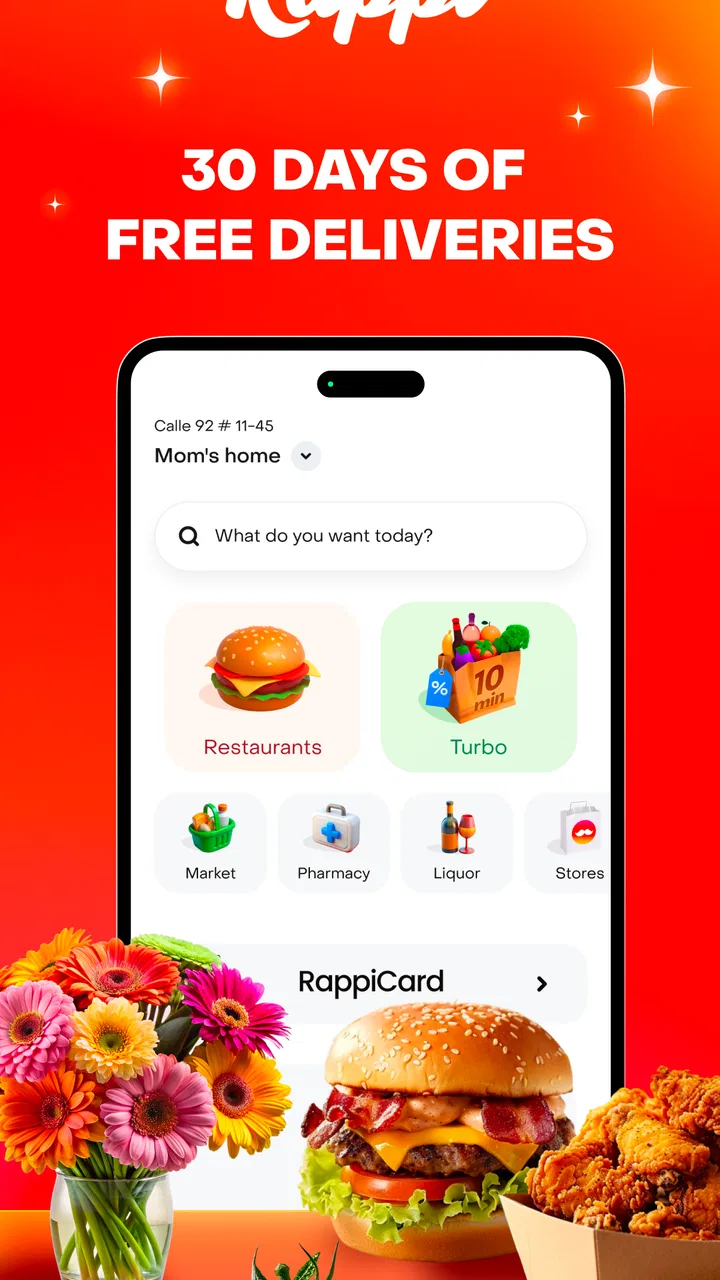
One app for food, groceries, and urgent errands
I find the all-in-one setup most useful when a delivery has to fit around a moving day rather than a perfect plan. A quick check of the connection before I start helps me avoid losing time while comparing nearby choices or reviewing a mixed basket. Next, it’s worth looking at how that dependence plays out on different mobile connections and in everyday settings.
You May Also Like

 AccuWeather: Weather Radar
AccuWeather Review: A Quick, Clear Forecast for Everyday Decisions
For everyday plans, the best forecast is the one you can understand quickly. AccuWeather makes rain timing, radar, and local conditions easy to act on, with a few trade-offs.

 Hill Climb Racing
Why Hill Climb Racing Still Turns Crashes Into One More Run
A tiny car, a bumpy hill and one more upgrade: Hill Climb Racing keeps resurfacing because its simple chaos makes every near-miss feel personal.

 AliExpress - Shopping App
AliExpress Makes Global Shopping Feel Personal, but Shoppers Bear the Risk
AliExpress turns a global marketplace into a pocket-sized discovery engine. Its reach is useful, its shopping loop compelling, and its trade-offs easy to miss.

 Lords Mobile: Kingdom Wars
Lords Mobile Is a Kingdom-Building Routine, Not a Quick Match
A case-by-case verdict on the building, battles, device demands, and social commitments that make Lords Mobile rewarding for some players and exhausting for others.

 PDF Scanner app - TapScanner
TapScanner Makes Paperwork Easier to Capture, Check, and Share
TapScanner makes scanning with a phone feel less like a rescue operation and more like a dependable step in getting work done. Its capture tools are useful, though not flawless.

 Block Blast!
 Shows How Much a Puzzle Game Can Leave Out
A quiet grid game shows why puzzle players increasingly value instant clarity, repeatable skill and low-pressure play—and where the genre still needs to catch up.
More From Our News Desk
View All News


The real advantage is switching tasks without switching apps
The strongest idea behind Rappi is not simply ordering dinner. Plenty of services already do that well. The more useful distinction is being able to move from a restaurant order to a grocery basket or a pharmacy search without starting over in a completely different service. When I am planning an evening at home, that can mean adding ingredients, a snack, or a household necessity in the same general workflow instead of making separate journeys.
This makes the app especially practical for small, time-sensitive purchases. A forgotten breakfast item, a missing ingredient, or something needed while caring for a sick family member can be more important than a large weekly shop. I would not treat it as an automatic replacement for every supermarket visit, but I do see the value in having one place to check several kinds of needs when time matters more than browsing every shelf.
The capability also changes how I think about the basket. With a restaurant-only app, I usually decide what meal I want and stop there. Rappi encourages a broader question: what else do I need delivered at the same time? That can save effort, although it can also make it easier to add impulse purchases. I recommend deciding the purpose of the order before opening the catalogue, particularly when I am tired or ordering in a hurry.
Why the combined catalogue is useful but not automatically simple
Food, groceries, and pharmacy products do not behave in the same way. A prepared meal is judged by temperature and timing. Groceries are judged by freshness, correct quantities, and acceptable replacements. Pharmacy-related shopping requires extra care because the right product, size, and form can matter. Putting these categories together is convenient, but it does not remove the differences between them.
For that reason, I find Rappi most convincing as a flexible local marketplace rather than as a perfectly predictable supermarket substitute. The app can help me discover what is available nearby, but I still need to read product names, sizes, descriptions, and order details carefully. A photograph that looks familiar is not enough when I am buying a specific pantry item or personal-care product.
The convenience comes from combining errands, not from eliminating the need to check them. That is an important distinction. If I treat the service as a quick shortcut and review the basket before payment, it can be very effective. If I assume every item will arrive exactly like a normal in-store purchase, disappointment becomes more likely.
How I use it when an order has more than one purpose
My preferred workflow starts with the most important item. If dinner is the priority, I choose the restaurant or meal first. If I am trying to solve a household problem, I begin with the grocery or pharmacy section instead. Only after that do I add secondary items. This keeps the order focused and makes it easier to notice whether the final basket still makes sense.
I then inspect the item names rather than relying only on category tiles. For groceries, I look at package descriptions and quantities. For pharmacy products, I take extra time with the exact wording. For restaurant meals, I check the selected options and any customizations before moving on. These are small habits, but they reduce the chance of receiving something that was visually similar while being functionally wrong.
Another useful habit is to keep a mental backup plan. If the order is for a recipe, I think about which ingredient is essential and which can be skipped. If it is for a pharmacy-related need, I do not assume that an alternative product will be suitable. If it is a meal, I decide whether a missing side would be acceptable before placing the order. This makes substitutions or unavailable products less disruptive to the rest of the day.
What the experience feels like in an ordinary situation
Imagine getting home and realizing that dinner ingredients are missing, while you also need a basic household item. The usual alternatives are a trip to a store, separate restaurant and grocery services, or giving up and ordering whatever is easiest. Rappi is most helpful in that middle moment: I can search for the meal or ingredients, check nearby options, and handle the extra item without opening several unrelated apps.
The benefit is not just saving travel time. It also reduces the mental cost of coordinating different orders. I can make one decision about what I need tonight, rather than remembering several confirmations, delivery screens, and support channels. Still, I would not combine unrelated items merely because the app makes it possible. A simple order is easier to verify, and a time-critical meal may be better kept separate from a more complicated grocery basket.
For a small top-up, the service feels more natural than for a full household shop. A few missing items are easier to inspect, and I can spot an unsuitable product before confirming. A large basket demands more patience and makes unavailable products or unwanted substitutions more consequential. That is where a physical supermarket or a dedicated grocery service may offer better control.
Practical questions about speed and reliability
The store summary presents Rappi as a way to receive food, groceries, pharmacy purchases, and more in minutes. I read that as the intended convenience, not as a promise that every order will follow the same timetable. Restaurant preparation, store availability, distance, traffic, and the complexity of the basket all influence the experience. I would use the displayed delivery estimate as part of the decision, but I would not plan an important appointment around the fastest possible outcome.
If I need something for a fixed event, I order earlier than the last possible moment. That is particularly important for groceries that must be used for cooking or for products needed by someone who cannot easily leave home. The app is useful for reducing effort, but it is not a substitute for a backup plan when the item is genuinely urgent.
Another question is whether it can replace a normal grocery trip. In my view, it depends on the size and precision of the shop. It works well for replenishing a few essentials, checking local availability, or avoiding a trip for bulky basics. It is less appealing when I want to compare freshness personally, inspect several alternatives, or control every detail of a large weekly purchase.
The tradeoff between choice and consistency
Having restaurants, shops, and other merchants in one app gives me more ways to solve a problem. It also means the experience can vary from one seller to another. A polished restaurant menu does not guarantee that a grocery catalogue will be equally clear, and a well-packed meal does not tell me how carefully another type of order will be handled.
This is where the average rating of 3.5 becomes useful context rather than a verdict. A broad delivery platform can be excellent for one order and frustrating for another because the merchant, product category, and timing are different. I would not dismiss the app because of the rating, but I would also avoid assuming that its scale guarantees a smooth result every time.
The same tradeoff affects support expectations. When an order includes several types of products, identifying the source of a problem can be less straightforward than with a single restaurant order. Was the item unavailable, packed incorrectly, or selected differently from what I expected? I reduce that friction by keeping the basket understandable and checking the confirmation details before I submit it.
Three less obvious ways to get better results
- Use it for a planned top-up rather than an unstructured browse. Writing down the two or three items that matter most before searching helps me avoid turning a quick errand into an oversized basket.
- Separate essential and flexible items in my thinking. If a grocery item is central to a recipe, I treat it differently from a snack or drink. That makes it easier to decide whether an alternative is acceptable.
- Match the app to the urgency of the purchase. A convenient delivery is valuable when it saves a trip, but a physical shop is safer when I need exact brands, precise freshness, or a guaranteed item immediately.
- Review mixed baskets as separate mini-orders. I check the meal, groceries, and pharmacy-related products independently instead of assuming one final glance will catch every mistake.
These habits may sound basic, but they address the main weakness of an all-purpose delivery app: convenience can make me move too quickly. The broader the catalogue, the more important it is to slow down for the few items where accuracy matters.
Who benefits most from the all-in-one approach
I think Rappi is a strong fit for people who value time and flexibility over the lowest possible total. It is particularly useful for apartment dwellers, busy households, people working from home, and anyone who occasionally needs a small grocery or pharmacy purchase without making a separate trip. It can also help when weather, mobility, or an unexpected schedule change makes going out inconvenient.
It is less suitable for shoppers who carefully compare supermarket prices, prefer selecting produce personally, or regularly buy a large weekly load. It may also frustrate someone who expects every merchant to offer identical delivery behavior and product information. In those cases, a local store, a dedicated supermarket app, or a restaurant-specific service may provide a more controlled experience.
I would also be cautious about using it as the only option for a medically important purchase. The pharmacy category is convenient for locating relevant products, but I would still verify the exact item and seek professional advice when the situation calls for it. Convenience should not replace judgment simply because the product appears in the same search environment as food and groceries.
Device support and what to expect from the current app
Rappi supports Android devices running version 7.0 or later, which makes it accessible on many older phones as well as newer ones. The current version is listed as 8.37.20260821-90018. I would keep the app updated when possible, especially for a service where order status and catalogue information need to stay current, but the practical value still depends more on the local merchants available to me than on the version label itself.
The mature age classification is worth noticing before installation on a shared family device. It is not an app I would hand to a young child as a casual browsing tool, particularly because it combines food, pharmacy products, and purchasing decisions in one place. For an adult user, the classification is simply part of understanding the intended audience.
My recommendation after weighing the convenience
Rappi succeeds when I use its central capability deliberately: one app can help me handle a meal, a small grocery run, and an unexpected everyday need without sending me across several services. That is a meaningful advantage, especially when the goal is to save a trip rather than to conduct a perfectly controlled weekly shop.
Its limitations are equally clear. Delivery timing can vary, product details deserve attention, and the quality of the experience is not necessarily uniform across categories or merchants. The 100M+ install reach shows that the concept has broad appeal, but popularity does not remove the need to inspect the basket and plan around important deadlines.
My honest recommendation is to try it for a modest, clearly defined order first. Use it when convenience has real value, keep essential items distinct from flexible ones, and choose a traditional store or a more specialized service when exact selection and predictable control matter more than avoiding a trip. For that kind of user, this free Food & Drink app is not merely a restaurant shortcut; it is a practical errand tool with enough range to earn a place on the phone, provided I use that range thoughtfully.
FAQs for Rappi: Food Delivery, Grocery
01What is Rappi: Food Delivery, Grocery, and what can I order through it?
Rappi is a delivery app that lets you order meals from local restaurants, groceries and household essentials from supermarkets, pharmacy products, convenience-store items, and other everyday purchases, depending on the services available in your city. After entering your address, the app shows nearby businesses, estimated delivery times, item prices, service fees, and available promotions before you place an order.
02Is Rappi available in every country or city?
No. Rappi operates only in selected countries and cities, mainly across Latin America, and the available services can vary significantly by location. Before downloading or registering, check whether your address is supported. Even in a covered city, some restaurants, stores, express delivery options, subscriptions, or courier services may not be available in every neighborhood or at all times.
03How much does Rappi delivery cost?
The final cost usually includes the price of the products, a delivery fee, and potentially service, small-order, priority-delivery, or other applicable charges. Fees can change according to distance, demand, weather, store policies, and order size. The app normally displays a breakdown before payment, so review the total carefully, including taxes, substitutions, tips, and promotional conditions.
04What payment methods does Rappi accept?
Payment options depend on your country and account, but Rappi commonly supports major debit and credit cards, digital wallets, and sometimes cash or locally available payment methods. You can generally add or manage payment methods inside the app. Check the payment screen before confirming because certain promotions, subscription benefits, refunds, or order types may require a specific payment method.
05What happens if an item is missing, unavailable, damaged, or delivered incorrectly?
If there is a problem with your order, open the relevant order in the app and use the help or support section as soon as possible. You may be asked to describe the issue and provide photos, particularly for damaged or incorrect products. Depending on the circumstances and local policies, Rappi may offer a refund, credit, replacement, or another resolution, but outcomes are not guaranteed.
Pros
- Wide selection of restaurants
- groceries
- pharmacies
- and convenience stores
- Real-time order tracking helps you follow the courier’s progress
- Multiple payment methods
- including cards and digital wallets
- Scheduled deliveries are useful for planning meals and household shopping
- Rappi Pro can reduce delivery fees for frequent users
Cons
- Delivery fees and service charges can vary significantly by order
- Prices may be higher than buying directly from the store or restaurant
- Customer support experiences can differ depending on the issue
- Availability and delivery times depend heavily on your local area
- Promotional discounts may include minimum spending or membership conditions

Rappi: Food Delivery, Grocery
Gallery